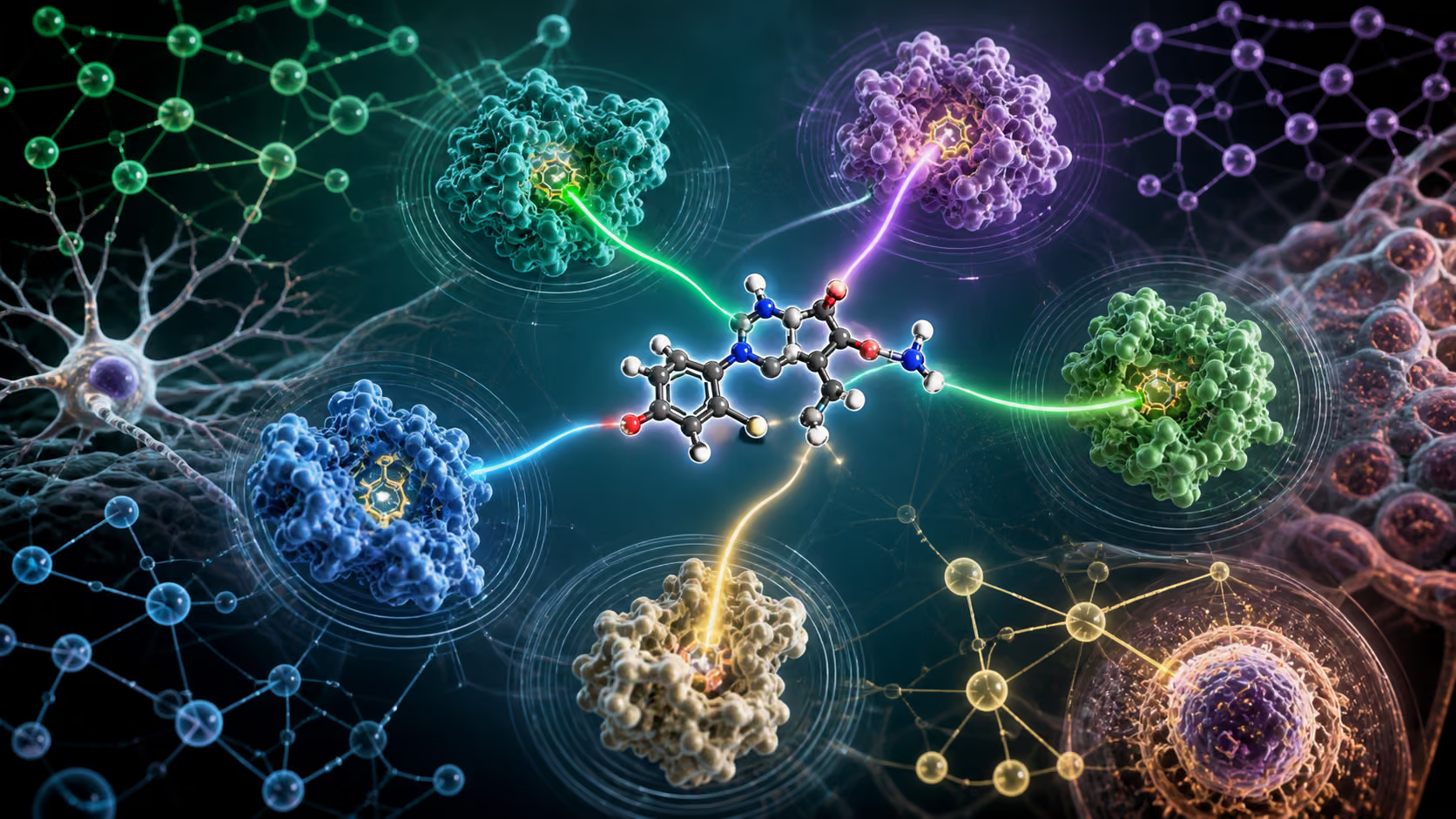
Many drug programs focus on one protein target. That can work well when changing the activity of that protein is enough to affect the disease.
Cancer, neurodegeneration, and autoimmune disease can involve several interacting pathways. Researchers may need to consider how a treatment affects more than one part of that network.
The Complexity Problem
Alzheimer’s research illustrates the challenge. Alongside amyloid-beta, researchers investigate tau, inflammation, synaptic function, metabolism, and vascular changes. Understanding how those processes interact can inform which treatments to investigate.
Similar questions arise in oncology and immunology. A target’s role depends on the surrounding biology, and changing one pathway can affect another.
AI Enables Multi-Target Thinking
Designing a treatment around several targets adds competing requirements. Each target has its own binding site, tissue context, and safety concerns.
AI can help researchers compare combinations and evaluate candidate molecules across those requirements. At AgentCures, our tools support work to:
- Identify target combinations from genomic, proteomic, and clinical data
- Design molecules with predicted activity against several targets
- Model the possible effects of those activities together
- Compare selectivity against related proteins
Combination Programs at AgentCures
Our approach considers both individual target activity and the effects of a treatment on connected pathways. This helps the team examine whether a combination has a plausible biological rationale.
In oncology, for example, researchers can investigate alternative signaling pathways that may contribute to resistance. Computational work helps identify hypotheses to test experimentally.
The Hard Part: Balance
More target activity is not always better. Dose, tissue exposure, potency ratios, and safety margins all matter. A candidate needs to affect the intended pathways without causing unacceptable effects elsewhere.
That balance requires computational design, experimental evidence, and scientific judgment throughout development.
The Data Integration Challenge
Relevant evidence may come from genomics, proteomics, metabolomics, and clinical studies, often in different formats. Comparing it requires careful preparation and a record of where each result came from.
AgentCures keeps data and analyses structured and version-controlled so the team can review the evidence supporting a target combination.
Choosing What to Test Next
Multi-target research gives teams a way to investigate diseases that may need several coordinated interventions. AI can help compare the options and make their trade-offs easier to examine.
The next step is an experiment that tests whether the proposed combination works as expected.